The Door That Only Looks Closed: A Monthly Fire Door Check for UK Managers
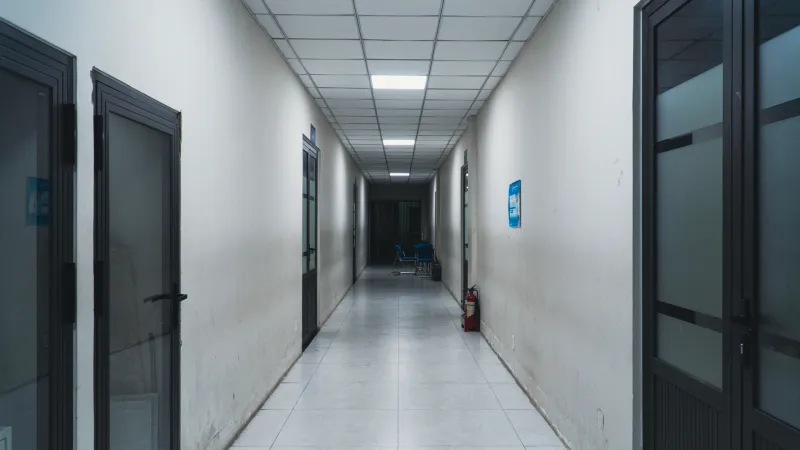
A fire door is one of the few pieces of building safety equipment that everyone uses and almost nobody inspects. It is walked through, pushed open, propped back and painted over. It can look perfectly serviceable while being held open by a wedge, missing a smoke seal or fitted with a closer that no longer latches. The gap between looking closed and working closed is where a monthly round earns its keep.
This is not a substitute for a fire risk assessment or for inspection by a competent person. It is a management routine: a short, repeatable check that catches the everyday failures before they become evidence of neglect.
Why the eye is a poor inspector
A fire door is a system, not a slab of timber. The leaf, frame, seals, hinges, closer, latch and signage all contribute. A door can be flush with its frame and still fail: the intumescent strip may be damaged, the smoke seal may be missing, the closer may have been disconnected, or the gap beneath the leaf may be wide enough to make the seal irrelevant.
The check therefore needs to be mechanical as well as visual. Open the door, release it, watch it close, listen for the latch and look at the edges. That takes seconds per door once the routine is familiar.
A five-point check per door
A practical monthly round can be built around five points. They are deliberately simple, because a check that requires a clipboard of guidance at every door will not survive a busy month.
- Leaf and frame condition. Look for cracks, warping, impact damage, damaged glazing and significant gaps. Check that the door sits squarely in the frame and that any vision panel or glazing is intact.
- Seals and strips. Confirm that intumescent strips and smoke seals are present, continuous and undamaged. They should not be painted over, torn or compressed beyond use. If a strip has been removed to make a door close more easily, that is a defect, not an adjustment.
- Self-closing and latching. Open the door from a modest angle and let it go. It should close fully and latch without assistance. Check that the closer is connected, that the arm is secure and that there is no wedge, hook, rope or hold-open device defeating it.
- Ironmongery and hinges. Check hinges for missing screws, excessive play or paint build-up. Check handles, latches and any automatic release mechanism for obvious damage. The door should operate without forcing.
- Signage and surrounding space. Confirm that required fire door signage is present and legible, and that the door is not obstructed by storage, furniture or waste. A door that is blocked open by a trolley is not a fire door in any meaningful sense.
A one-line entry per door is enough for the record: door identifier, date, result, action and initials. If a defect is found, the line should say what was done, not simply that the door was checked. 'Closer not latching, reported to contractor, temporary notice fitted' is a record. A tick alone is not.
Divide the building, not the attention
A fifteen-minute slot is realistic for a floor with perhaps a dozen doors if the route is planned and the sheet is prepared. A fifty-door building is not a fifteen-minute job. It is four or five fifteen-minute jobs across the month.
Use the floor plan rather than memory. Number the doors, group them into zones and assign each zone to a week. The same route each month reduces missed doors and makes comparison easier. Where a building has flat entrance doors, plant rooms or storage areas, keep those in separate zones rather than allowing them to fall between rounds.
The written record matters more than the walk itself. A fire risk assessor, insurer or enforcing authority is unlikely to be impressed by a claim that doors are checked regularly. They will look for evidence: dates, door references, defects and follow-up. A single sheet per zone, retained with the fire safety file, is usually sufficient.
The failures that come back
Certain defects recur because they are convenient. Wedges and hold-opens appear where doors are heavy, corridors are hot or trolley routes are awkward. Missing or painted-over seals appear after decoration. Closers are disconnected when a door becomes difficult for daily use. Storage accumulates against doors because the nearest cupboard is full.
Treat these as symptoms as well as faults. A wedge may be a maintenance issue, a route planning issue or a sign that the door is unsuitable for the level of traffic. Replacing the wedge without asking why it was there usually guarantees its return.
When to stop and escalate
A monthly check is not a repair visit. If a door is badly damaged, will not latch, has a disconnected closer or has missing seals over a significant length, record it and escalate promptly. Do not make adjustments to closers or seals unless the person doing so is competent to do so. If a door is so defective that it cannot perform its function, the interim measure should be agreed with the responsible person, not improvised by the person holding the checklist.
Making the round stick
The routine should have a fixed place in the calendar, a named owner and a nominated deputy. Keep the sheets together and review them quarterly for repeat defects, overdue actions and zones that are routinely skipped. That review is more useful than the individual ticks: it shows whether the building is being managed or merely visited.
A fire door that only looks closed is a quiet liability. Fifteen minutes a month, a short route and a written line per door will not solve every fire safety problem, but they will interrupt the small failures that make a door useless long before anyone notices.