Someone Expects to Hear From You: A Lone Worker Contact Routine for UK Teams
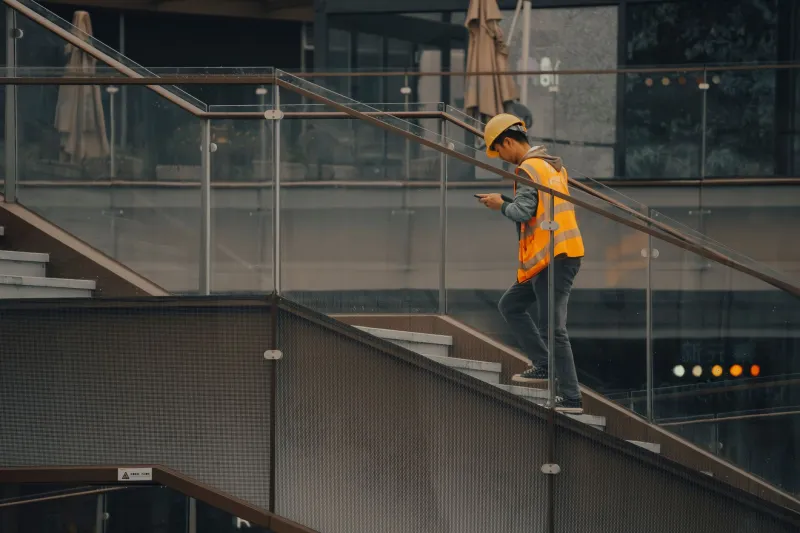
Lone working rarely announces itself. It is the surveyor closing a rural site at dusk, the maintenance engineer alone in a plant room, the care worker on a late visit, or the administrator holding the office before a weekend shutdown. UK law does not ban lone working; it requires employers to assess the risks and put sensible controls in place. One of the most effective controls is also one of the least technical: somebody expects to hear from the lone worker, and knows what to do if they do not.
Begin with the task, not the technology
Before choosing an app, a tracking system or a new form, define the lone-working task. Is the person working alone in a low-risk office, or in a remote location with poor signal and hazardous equipment? The answer should shape the frequency of contact and the speed of escalation. A ten-minute response window may be proportionate for a routine office task; a remote site or higher-risk activity may need shorter intervals, a buddy, or a different control altogether.
The risk assessment remains the foundation. The contact routine is not a substitute for eliminating or reducing risk; it is the layer that ensures someone notices when things go wrong.
Set the expectation before the shift
A check-in routine works only when the lone worker and the nominated contact have the same expectations. Before the period of lone working begins, confirm the task, the location, the expected start and finish times, the check-in times, the method of contact and the escalation contacts. For small teams, a shared calendar entry or a single-line entry in a shared document may be enough. The important point is that the nominated contact is actually on duty. A name on a sheet is not a control if that person is in a meeting, on leave or unreachable.
The lone worker should also know what to do if they cannot make a check-in. A flat battery, a lost signal or an urgent task should not become a silent gap. Agree a fallback method and a fallback person in advance.
Keep the check-in short and regular
A check-in does not need to be a conversation. A brief call or message confirming name, location, task status and the next check-in time is usually sufficient. The value lies in the regularity, not the length. Use a primary method and a backup method. A phone call may be primary; a text message, radio or messaging app may be the backup. Where signal is unreliable, agree a known point where contact can be made, or reconsider whether the task should be done alone at all.
Avoid relying on memory. Set an alarm on the work phone and on the supervisor's phone. If the lone worker is using a personal phone, confirm that this is acceptable and that the number is current.
When a check-in is missed
One missed check-in is the trigger, not a reason to wait for a pattern. For lower-risk work, a ten-minute grace period may be reasonable: the supervisor tries the lone worker's phone, then the backup number, then the site contact or emergency contact. For higher-risk work, escalate immediately. The escalation ladder should be written down, short and known to everyone involved.
A practical sequence is: call the lone worker; call the agreed buddy or second contact; contact the site, landlord or security office; and, if there is genuine concern for safety, call the emergency services. Record the times of each attempt. Do not let the routine become a test of patience. The purpose is to get help moving, not to establish blame.
Record only what earns its keep
A lone-worker log should capture the date, the person's name, the task, the location, the expected start and finish times, the check-in times due and actual, any escalation steps taken and any issues arising. Keep it in one place, and keep it brief. A single shared sheet is often better than a complex system that nobody updates.
Data protection matters. Collect only what the risk assessment justifies, restrict access to those who need it, and set a retention period. Continuous location tracking is rarely necessary for routine lone working and should not become the default. The record should support safety and learning, not surveillance.
Test the routine quietly
A protocol that has never been tested is an assumption. Once a month, choose a low-risk occasion and simulate a missed check-in. The nominated tester does not answer the first call. The supervisor follows the escalation ladder as far as the second contact, without involving the emergency services. Note how long it takes to reach a real person and whether the contact details are correct.
Debrief in five minutes. The aim is to find dead phone numbers, unclear roles and gaps in cover, not to stage a dramatic drill. Test at shift changes, during holiday cover and in areas with poor signal. A routine that works only on a quiet Tuesday is not yet a routine.
Keep it alive in a small team
Name a coordinator and a deputy. Avoid relying on one supervisor who is always available. Include the routine in induction, and review it when tasks, locations or people change. A buddy system can work well in small teams, provided the buddy knows what to do and is not also working alone in a way that makes them unreachable.
Proportionality matters. A three-person team does not need a control room. It needs an agreed person, an agreed time and an agreed next step. The routine should be simple enough to survive a busy Friday and clear enough to be followed by someone who has never done it before.
A ten-minute monthly review
Set aside ten minutes each month to check the contact list, the log and any missed check-ins. Ask three questions: did anyone work alone without an agreed check-in; were the escalation numbers correct; and did any test expose a gap? Record the review, assign actions and set a date for the next one. This small habit keeps the routine from becoming paperwork that nobody reads.
The best lone-worker protocol is not the most elaborate. It is the one that makes someone expect to hear from a colleague, and act when they do not.